
I Had Plenty of Content Ideas and Almost Nothing Published
My research system kept finding useful ideas. The handoff from one source to platform versions, scheduling, and a confirmed public post kept losing them.
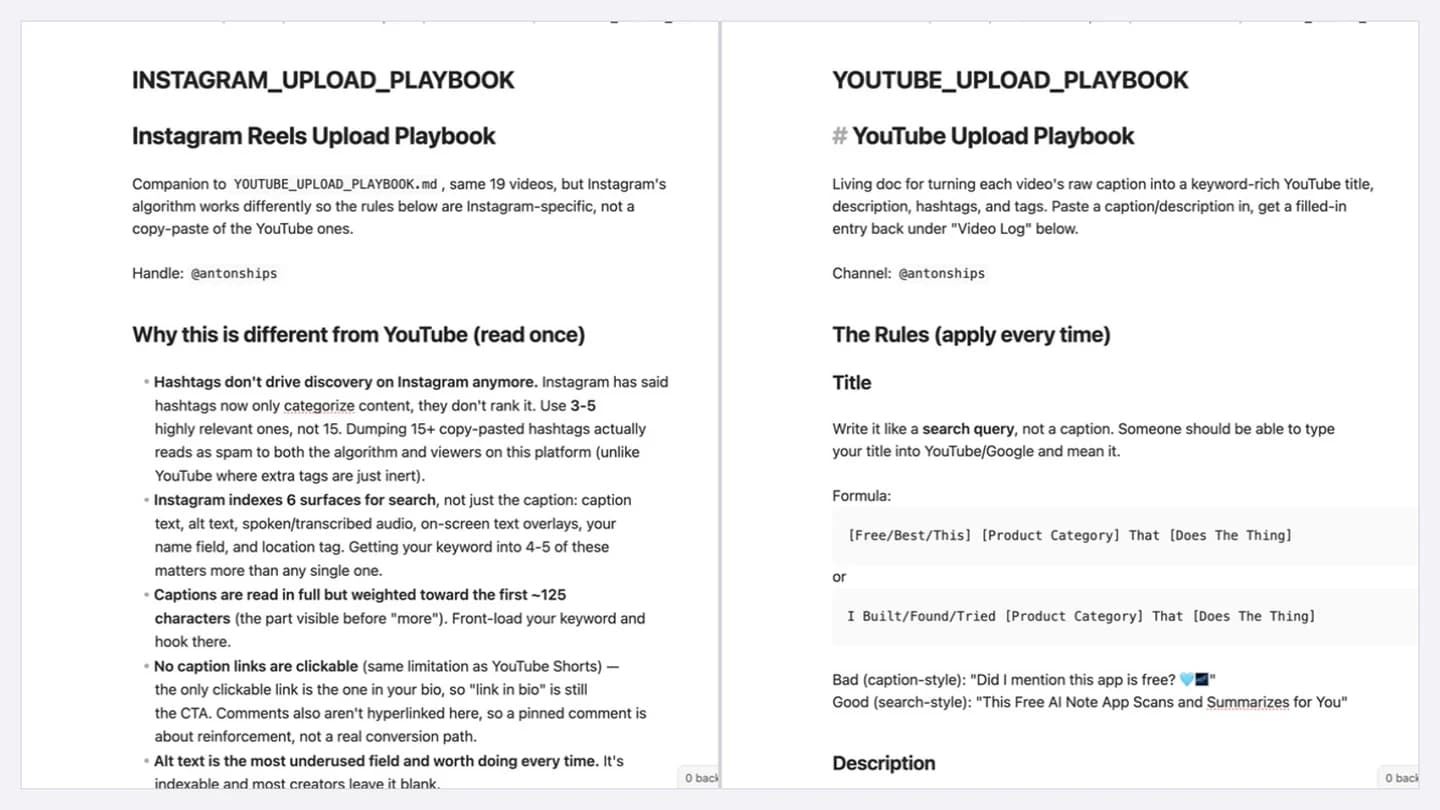
I made separate Instagram and YouTube upload documents for the same Pocket Orbit videos.
They were supposed to stay in sync, which sounds perfectly reasonable until two files have had a few months to develop independent lives.
When I opened them again, the lists no longer matched. The Instagram document contained entries the YouTube one did not, and one of its rows still carried a YouTube tracking link. The calendar held yet another version of the week, although a row could mean planned, drafted, scheduled, attempted, or actually public depending on when I last remembered to update it.
One source library. Two upload documents. Several answers to what existed.
I blamed the documents first. Then I followed one post through the rest of the workflow and found the same drift in the calendar, the exports, and the upload state.
I could decide what to make. Getting the right version all the way to a public URL still depended on my memory.
I kept fixing the research because it was easier
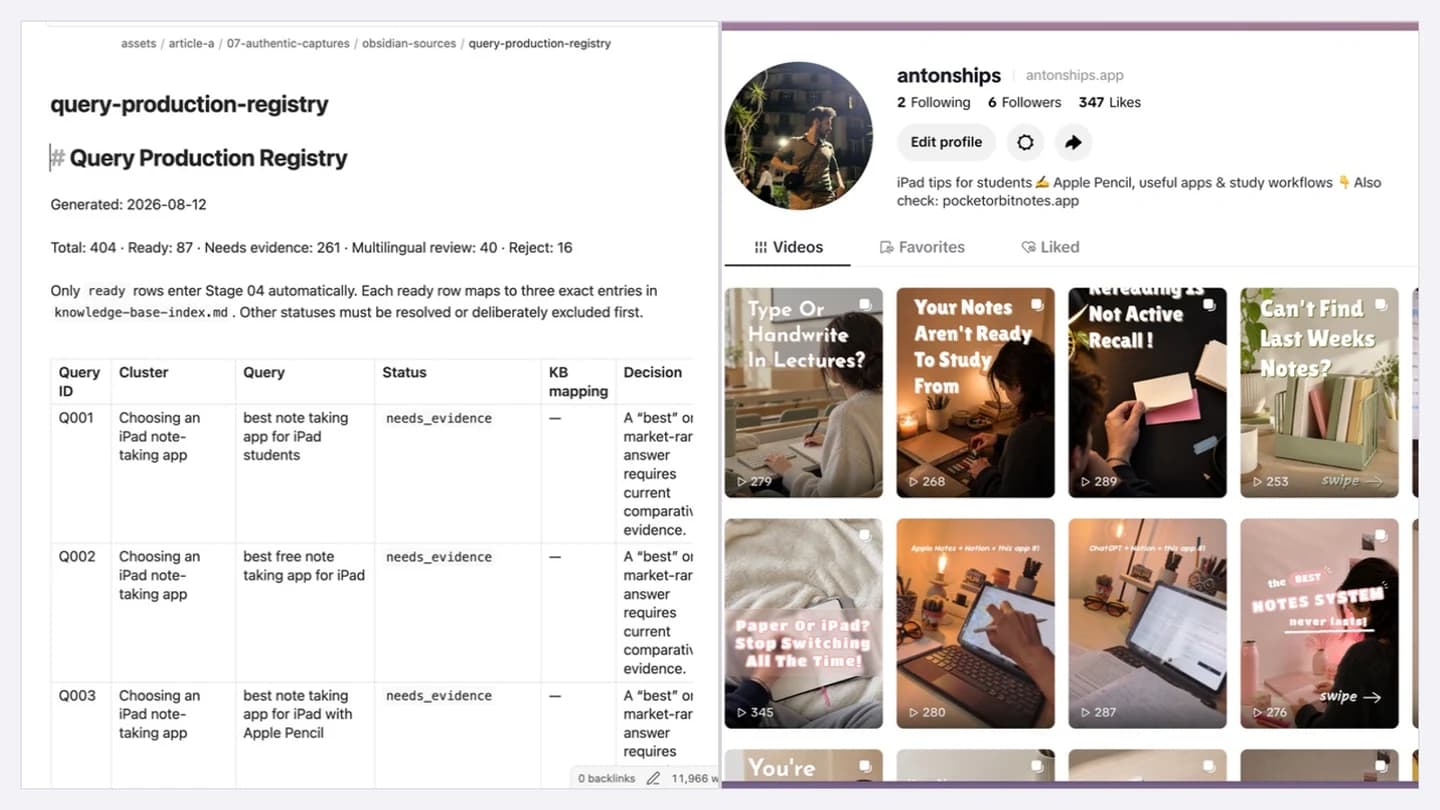
The research system was genuinely useful. It started with phrases people were already searching around iPad notes, Apple Pencil workflows, lecture notes, handwriting, organisation, summaries, exports, and study methods.
I kept a knowledge base behind those phrases because I did not want a search term to turn straight into a confident answer I could not support. A query could be popular and still need better evidence, fall outside Pocket Orbit, or require review from somebody who actually spoke the language.
By then, the registry had grown into hundreds of search queries. A much smaller set had enough evidence to move into production.
Ready still only meant I could start making the thing.
So I kept returning to the registry. Cleaning another row felt manageable. Finishing, adapting, and publishing the work attached to it did not.
Then I counted the finished work
There were three completed carousels.
Each one had five slides: a hook based on the search query, three useful answer slides, and one action at the end. Pocket Orbit could appear once when it genuinely helped with the answer.
Those fifteen finished slides still required visual research, copy, real product screens, claim checks, layout, exports, and upload preparation.
Clearing the research check only put a topic at the start of production. It still needed a script, visuals, exports, and a version for each platform.
Every file remembered a different version
One recording could become a TikTok edit, an Instagram caption, a YouTube title and description, sometimes a Facebook version, and a few notes about what I wanted to change later.
Updating one version did not update the others. Moving a date in the calendar did not prove the file was ready. A successful upload did not necessarily mean somebody else could see the post.
Planned, scheduled, attempted, and public were quietly becoming the same state.
The calendar looked organised because Tuesday had a row. It still could not tell me what had actually happened.
I was reusing the wrong thing
I had treated the final caption as the reusable unit. It should have been the real source underneath it.
That source might be a Pocket Orbit feature, a TikTok result, a paywall failure, or something I noticed while building after work. The event and its evidence should remain stable while the presentation changes for each destination.
On X, I can explain the reasoning. On TikTok, the useful visual has to arrive almost immediately. Instagram may use similar footage but still needs its own framing. YouTube needs another title, description, thumbnail, and link setup.
Copying one finished caption into every box was quick, but it flattened the idea into a version that fit nowhere particularly well.
The workflow I needed was simple enough to explain:
- One real source
- Versions for each platform
- Review
- Schedule
- Check what really went live
I was still the only thing keeping those pieces connected.
That became Sendezeit
Sendezeit starts with something that actually happened, then keeps the destination versions, edits, approvals, calendar entries, and provider results attached to that source.
It does not fix the Pocket Orbit paywall or explain why somebody watched a TikTok and did not subscribe. Those questions still belong in the product, RevenueCat, and the analytics.
Sendezeit cuts out that weekly scavenger hunt. One source sits beside its X, TikTok, and YouTube versions. Each one keeps its own copy, media, review, schedule, and final publication result. I no longer have to remember which draft was final, reopen every platform to check it, or compare a calendar with a folder full of exports.
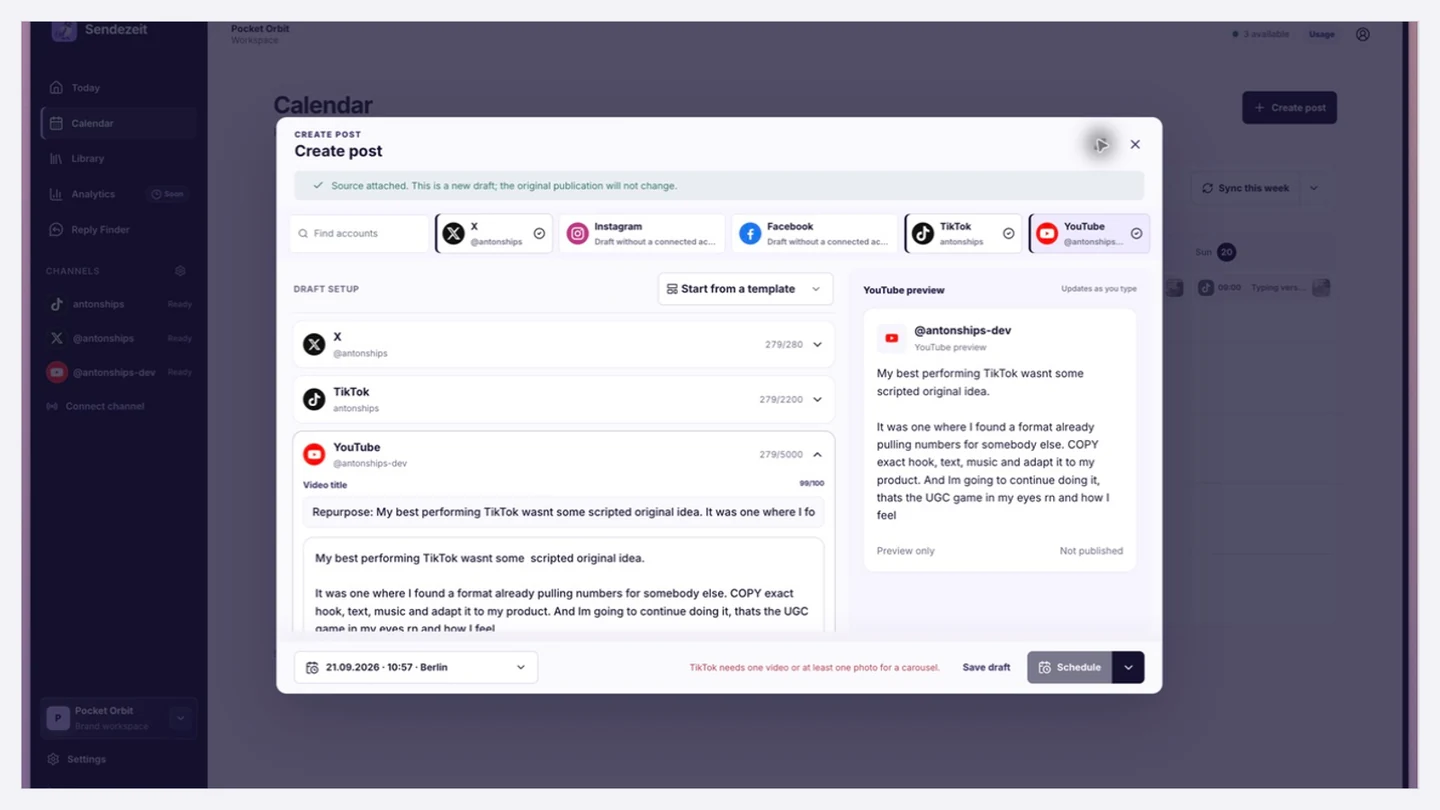
You can run the same method in a spreadsheet: keep one source, write each platform version separately, review it, and record the public result beside the plan. I built Sendezeit because I was tired of maintaining those joins myself.
I had spent most of my time improving research because it was easy to organise. Meanwhile, I kept losing time at the other end, working out which version went where and whether it really went live. That gave me one clear requirement for the product: keep a reliable record of what I published.
Sendezeit is live now. X and YouTube remain in beta until real connection and publish smoke tests succeed. TikTok uses Direct Post when the account is eligible or an explicit draft handoff when it is not. Instagram and Facebook stay labelled coming soon while Meta review finishes.
People also ask
The practical questions behind the workflow.
What is a creator content workflow?
It is the path from a real source through platform-specific versions, review, scheduling, publication confirmation, and learning.
Should I post the same content on every platform?
Reuse the factual source, but shape the final writing, media, and call to action for the destination.
Does a scheduled post count as published?
No. A calendar slot records intent. Keep the provider result and final public URL as separate states.
Can I manage this workflow in a spreadsheet?
Yes. Give every source a stable ID, connect every destination version to it, and record the public result beside the plan.
How often should a creator post?
Start with the smallest cadence that still leaves time for useful research, native adaptation, review, and confirmation.